
Explained • 8 min read
UEFA Champions League Explained: Format, Rules & History (2026)
The UEFA Champions League is the biggest annual club competition in world football. Every season, the best teams in Europe play each other from September to a single final in late spring. This guide explains how it works in 2026 — the format, the rules, how teams qualify, and how it all began.
What is the Champions League?
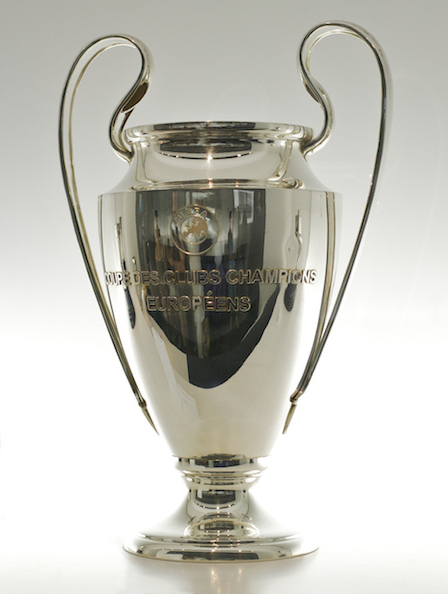
The Champions League is UEFA's premier club tournament. It is organised by UEFA, the governing body of European football. Clubs qualify through their domestic leagues and, for a small number, through qualifying rounds played before the main tournament. The winner is crowned champion of Europe and also qualifies for the following season's Champions League, the UEFA Super Cup and the FIFA Intercontinental Cup.
A short history: from the European Cup to the Champions League
The competition began in 1955 as the European Cup. In its early years it was a straight knockout tournament, open mainly to domestic league champions. Real Madrid won the first five editions, from 1956 to 1960 — a record no club has matched.
In 1992 the tournament was rebranded as the UEFA Champions League. The rebrand brought a new format, a group stage, and the famous anthem that plays before every match. Over the decades the field grew: more clubs, more countries, and more matches. Spanish clubs have won the most titles overall (20), followed by England (15), Italy (12) and Germany (8).
The current format: the 36-team league phase
Since the 2024–25 season, the Champions League no longer starts with a group stage. Instead, all 36 teams play in a single league phase:
- Each team plays 8 matches — 4 at home and 4 away — against 8 different opponents.
- After the league phase, the top 8 teams go straight to the round of 16.
- Teams finishing 9th to 24th play a two-legged knockout play-off for the remaining 8 places in the round of 16.
- Teams finishing 25th to 36th are eliminated from Europe for that season.
From the round of 16 onwards, the tournament is a classic two-legged knockout: each tie is played home and away, and the team with the higher aggregate score advances. The final is a single match at a neutral venue, decided on the night — with extra time and penalties if needed.
How do teams qualify?
Most teams qualify through their position in their domestic league the previous season. Europe's strongest leagues send four or five clubs each; smaller leagues send their champions into qualifying rounds. The previous season's Champions League winner and Europa League winner also earn places, which can create an extra spot for their league. In short: finish near the top of your league, and you are in.
Why does it matter so much?
Three reasons. First, prestige: it is the trophy every great club player is judged by. Second, money: Champions League revenue funds squads, academies and stadiums. Third, the nights themselves: comebacks like Liverpool's in Istanbul in 2005 and Barcelona's 6–1 against Paris Saint-Germain in 2017 are part of football folklore, and they only happen in this competition.
Frequently asked questions
Is the Champions League the same as the European Cup?
Yes — the Champions League is the same competition, rebranded in 1992. Records from the European Cup era (1955–1992) count in the competition's all-time history.
How many teams play in the Champions League?
36 teams play in the league phase of the main tournament, after qualifying rounds for clubs from smaller leagues.
When is the final?
The final is played in late May or early June each year, at a stadium chosen in advance by UEFA.